5 steps to NIS2-compliant log monitoring
The European NIS2 Directive is bringing about a significant shift in cybersecurity requirements. For many organisations, this means that information security can no longer be viewed merely as a technical operational task. Instead, the focus is shifting towards robust processes, verifiable protective measures and a significantly higher level of responsiveness to security incidents. Small and medium-sized enterprises in particular now face a twofold challenge: they must meet regulatory requirements whilst simultaneously establishing workable solutions with limited human and financial resources.
One area that is becoming increasingly important in this context is log monitoring. Security-related log data is generated in virtually all IT systems, from firewalls and servers to directory services and applications, right through to cloud platforms and end devices. This data contains valuable clues regarding attacks, misconfigurations, misuse, availability issues and other security-related anomalies. Without structured monitoring, however, they often remain unused. In such cases, logs may exist, but there is no real transparency.
This is particularly critical for small and medium-sized enterprises. Many companies have complex, legacy IT infrastructures, multiple system administrators and only limited capacity for manual analysis. This is precisely why NIS2-compliant log monitoring is not simply a matter of data collection. It is about the ability to specifically capture security-relevant events, evaluate them centrally, prioritise them correctly and integrate them transparently into security and compliance processes. A solution such as LOMOC, which offers log monitoring based on OpenSearch, can help to bring these requirements together both technically and organisationally.The European NIS2 Directive is bringing about a significant shift in cybersecurity requirements. For many organisations, this means that information security can no longer be viewed merely as a technical operational task. Instead, the focus is shifting towards robust processes, verifiable protective measures and a significantly higher level of responsiveness to security incidents. Small and medium-sized enterprises in particular now face a twofold challenge: they must meet regulatory requirements whilst simultaneously establishing workable solutions with limited human and financial resources.
One area that is becoming increasingly important in this context is log monitoring. Security-related log data is generated in virtually all IT systems, from firewalls and servers to directory services and applications, right through to cloud platforms and end devices. This data contains valuable clues regarding attacks, misconfigurations, misuse, availability issues and other security-related anomalies. Without structured monitoring, however, they often remain unused. In such cases, logs may exist, but there is no real transparency.
This is particularly critical for small and medium-sized enterprises. Many companies have complex, legacy IT infrastructures, multiple system administrators and only limited capacity for manual analysis. This is precisely why NIS2-compliant log monitoring is not simply a matter of data collection. It is about the ability to specifically capture security-relevant events, evaluate them centrally, prioritise them correctly and integrate them transparently into security and compliance processes. A solution such as LOMOC, which offers log monitoring based on OpenSearch, can help to bring these requirements together both technically and organisationally. Ein Bereich, der in diesem Zusammenhang erheblich an Bedeutung gewinnt, ist das Log-Monitoring. Sicherheitsrelevante Protokolldaten entstehen in nahezu allen IT-Systemen, von Firewalls und Servern über Verzeichnisdienste und Anwendungen bis hin zu Cloud-Plattformen und Endgeräten. Diese Daten enthalten wertvolle Hinweise auf Angriffe, Fehlkonfigurationen, Missbrauch, Verfügbarkeitsprobleme und andere sicherheitsrelevante Auffälligkeiten. Ohne strukturiertes Monitoring bleiben sie jedoch oft ungenutzt. Dann existieren zwar Logs, aber keine echte Transparenz.
Equally important is the integration with the incident response process. An alert is only useful if it is clear how it should be handled. Organisations should define which events trigger a simple review, which require escalation to IT security or management, and in which scenarios a formal incident response is initiated. The quality of log monitoring is therefore evident not only in dashboards or search queries, but in the ability to act quickly and in a structured manner when an emergency arises.
Finally, maintaining a trail of evidence is also part of governance. Organisations should be able to document which systems are being monitored, which categories of events are being focused on, how alerting rules are structured, and what improvements have been identified through reviews or incident analyses. This documentation not only enhances audit readiness but also strengthens internal control. LOMOC effectively combines technical analysis with organisational accountability, as dashboards, search functions and centralised data storage provide a solid foundation for reporting and continuous optimisation.
Why LOMOC is relevant for NIS2-compliant log monitoring in small and medium-sized enterprises
Many medium-sized businesses are not looking for an oversized security platform, but rather a solution that pragmatically addresses their actual needs. This is precisely where LOMOC comes into its own. As a protocol monitoring solution based on OpenSearch, it combines centralised data collection, flexible analysis and scalable search and analysis functions. This is particularly valuable in scenarios where logs from different infrastructures, applications and security components need to be consolidated.
LOMOC helps medium-sized businesses generate a structured and actionable security overview from disparate logs. Through centralised storage, high-performance search capabilities, dashboards and rule-based analysis, the IT team can contextualise events more quickly and identify anomalies at an earlier stage. At the same time, the platform can be deployed in such a way that it not only supports day-to-day operations but also facilitates traceability, documentation and compliance.
This means that LOMOC is not merely a technical tool, but a building block for greater cyber resilience. This point is particularly crucial in the context of NIS2. Organisations do not need a simple log repository, but rather a monitoring system that creates transparency, highlights risks and remains compatible with organisational structures.
Conclusion: NIS2-compliant log monitoring is a strategic security factor for small and medium-sized enterprises
For medium-sized businesses, NIS2-compliant log monitoring is becoming a key element of modern information security. Organisations that fail to record security-related logs in a structured manner, analyse them centrally and integrate them into response processes will lose valuable time in an emergency and, at the same time, struggle to provide verifiable evidence of the measures taken. The good news, however, is that the path to greater transparency and compliance does not have to start with maximum complexity.
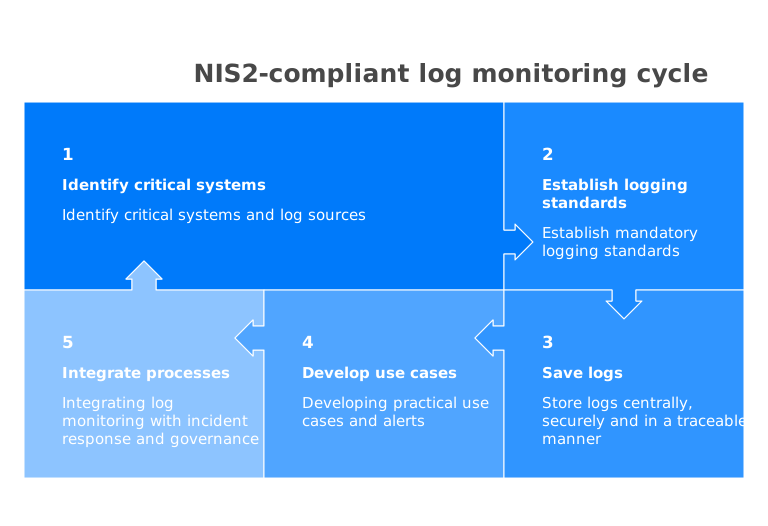
The five steps are clear. First, critical systems and relevant log sources must be identified. Next, binding logging standards, centralised and secure storage, practical use cases for alerting, and close integration with incident response and governance are required. Organisations that follow this approach in a structured manner not only improve their regulatory position but also tangibly strengthen their ability to detect attacks and disruptions at an early stage.
LOMOC can provide effective support in this regard. As an OpenSearch-based protocol monitoring solution, it lays the technical foundation for centralised transparency, flexible analysis and operational usability. For small and medium-sized enterprises in particular, this provides a realistic and robust approach to combining NIS2 requirements with genuine security benefits.
Are you looking to set up your log monitoring in compliance with NIS2 and searching for a solution that meets the needs of medium-sized businesses? With LOMOC, you get a powerful log monitoring solution based on OpenSearch that consolidates logs centrally, makes them analysable, and lays the groundwork for greater transparency, faster response times and robust compliance.Equally important is the integration with the incident response process. An alert is only useful if it is clear how it should be handled. Organisations should define which events trigger a simple review, which require escalation to IT security or management, and in which scenarios a formal incident response is initiated. The quality of log monitoring is therefore evident not only in dashboards or search queries, but in the ability to act quickly and in a structured manner when an emergency arises.
Finally, maintaining a trail of evidence is also part of governance. Organisations should be able to document which systems are being monitored, which categories of events are being focused on, how alerting rules are structured, and what improvements have been identified through reviews or incident analyses. This documentation not only enhances audit readiness but also strengthens internal control. LOMOC effectively combines technical analysis with organisational accountability, as dashboards, search functions and centralised data storage provide a solid foundation for reporting and continuous optimisation.
Why LOMOC is relevant for NIS2-compliant log monitoring in small and medium-sized enterprises
Many medium-sized businesses are not looking for an oversized security platform, but rather a solution that pragmatically addresses their actual needs. This is precisely where LOMOC comes into its own. As a protocol monitoring solution based on OpenSearch, it combines centralised data collection, flexible analysis and scalable search and analysis functions. This is particularly valuable in scenarios where logs from different infrastructures, applications and security components need to be consolidated.
LOMOC helps medium-sized businesses generate a structured and actionable security overview from disparate logs. Through centralised storage, high-performance search capabilities, dashboards and rule-based analysis, the IT team can contextualise events more quickly and identify anomalies at an earlier stage. At the same time, the platform can be deployed in such a way that it not only supports day-to-day operations but also facilitates traceability, documentation and compliance.
This means that LOMOC is not merely a technical tool, but a building block for greater cyber resilience. This point is particularly crucial in the context of NIS2. Organisations do not need a simple log repository, but rather a monitoring system that creates transparency, highlights risks and remains compatible with organisational structures.
Conclusion: NIS2-compliant log monitoring is a strategic security factor for small and medium-sized enterprises
For medium-sized businesses, NIS2-compliant log monitoring is becoming a key element of modern information security. Organisations that fail to record security-related logs in a structured manner, analyse them centrally and integrate them into response processes will lose valuable time in an emergency and, at the same time, struggle to provide verifiable evidence of the measures taken. The good news, however, is that the path to greater transparency and compliance does not have to start with maximum complexity.
The five steps are clear. First, critical systems and relevant log sources must be identified. Next, binding logging standards, centralised and secure storage, practical use cases for alerting, and close integration with incident response and governance are required. Organisations that follow this approach in a structured manner not only improve their regulatory position but also tangibly strengthen their ability to detect attacks and disruptions at an early stage.
LOMOC can provide effective support in this regard. As an OpenSearch-based protocol monitoring solution, it lays the technical foundation for centralised transparency, flexible analysis and operational usability. For small and medium-sized enterprises in particular, this provides a realistic and robust approach to combining NIS2 requirements with genuine security benefits.
Are you looking to set up your log monitoring in compliance with NIS2 and searching for a solution that meets the needs of medium-sized businesses? With LOMOC, you get a powerful log monitoring solution based on OpenSearch that consolidates logs centrally, makes them analysable, and lays the groundwork for greater transparency, faster response times and robust compliance. Sie möchten Ihr Log-Monitoring NIS2-konform aufstellen und suchen eine Lösung, die zu den Anforderungen mittelständischer Unternehmen passt? Mit LOMOC erhalten Sie ein leistungsfähiges Protokollmonitoring auf Basis OpenSearch, das Logs zentral zusammenführt, auswertbar macht und die Grundlage für mehr Transparenz, schnellere Reaktion und belastbare Compliance schafft.